
What Post Falls and Coeur d'Alene homeowners should look for on their monthly water bill, what normal usage actually looks like, and how a spike in your numbers can be the first sign of a hidden leak.
By Matthew Ratautas | DryMax Restoration | March 2026
Most homeowners in Post Falls and Coeur d'Alene don't spend much time thinking about their water bill unless it seems unusually high. And that's actually a problem, because your water bill is one of the earliest and most reliable signals that something is wrong with your plumbing.
Hidden leaks are one of the most damaging things that can happen inside a home. A pipe that drips slowly inside a wall, a toilet that runs continuously, or a supply line that has started to weep behind the refrigerator can go undetected for months. By the time a homeowner notices water staining on a ceiling or soft spots in a floor, the damage is usually well established.
The good news is that most hidden leaks leave a trail. That trail runs right through your monthly water bill. Knowing how to read it and what to watch for can help you catch a problem weeks or even months before it becomes a full-blown restoration situation.
What a Normal Water Bill Looks Like in North Idaho
Before you can spot an abnormal bill, you need to know what normal looks like. Water usage varies by household size, season, and lifestyle, but there are some reliable benchmarks worth knowing.
According to the U.S. Environmental Protection Agency's WaterSense program, the average American family uses about 300 gallons of water per day, or roughly 9,000 gallons per month. For a household of two people, typical usage is closer to 4,000 to 6,000 gallons per month depending on habits.
In North Idaho specifically, usage tends to be higher in summer months when irrigation systems, gardens, and outdoor water use increase. Winter usage for most households with no outdoor irrigation should be relatively consistent from month to month. If your winter bills are steady and then one month jumps significantly without a clear reason, that jump is worth investigating.
Your water utility in Post Falls or Coeur d'Alene will show your usage in either gallons or hundred cubic feet (HCF) on your bill. One HCF equals 748 gallons. Knowing which unit your bill uses is the first step to reading it accurately.
How to Spot a Leak on Your Water Bill
Look for Month-Over-Month Spikes
The most obvious sign of a hidden leak is a sudden increase in usage from one billing period to the next without a corresponding change in how you're using water. If your household hasn't added new people, changed your irrigation schedule, or done anything that would explain more water consumption, a spike of 20 percent or more is worth paying attention to.
Some leaks are dramatic and show up as a massive single-month increase. Others are gradual and show up as a slow creep upward over several months. Both patterns are worth tracking. A bill that climbs by a consistent 500 to 1,000 gallons each month for three or four months in a row often indicates a slow leak that is getting progressively worse.
Compare the Same Month Year Over Year
Seasonal variation is normal. Your July bill will almost always be higher than your January bill if you water a lawn or garden. A more useful comparison is to look at the same month from the previous year. If this January's bill is significantly higher than last January's and nothing about your household has changed, that discrepancy is a red flag.
Most water utilities in the Post Falls and Coeur d'Alene area allow you to view your usage history online. If you haven't set up an online account with your water provider, it's worth doing. Having 12 to 24 months of usage history makes patterns much easier to spot.
Check Your Bill's Usage Graph
Many utility bills now include a small usage graph that shows your consumption over the past several months. This is one of the most useful tools on the entire bill and it's one most homeowners glance past without really looking at it. A flat, consistent line is good. A line that trends upward, spikes suddenly, or shows an unexplained jump from one period to the next is worth investigating further.
How to Use Your Water Meter to Confirm a Leak
Your water bill tells you that something might be wrong. Your water meter can help you confirm it. This is a simple test and it takes about 30 minutes.
Start by turning off every water fixture in the house. Faucets, appliances, irrigation systems, everything. Then go to your water meter, which is typically located near the street or at the edge of your property, and note the current reading. Leave everything off for 30 minutes, then check the meter again.
If the meter reading has changed during that 30-minute window and no water was used in the house, you have a leak somewhere in your plumbing system. The faster the meter moved, the larger the leak.
The EPA's guide to checking for household leaks recommends this same meter test as a starting point for homeowners who suspect a leak. Their research indicates that household leaks can waste nearly 10,000 gallons of water per year on average, and that 10 percent of homes have leaks that waste 90 gallons or more per day.
If the meter test confirms a leak, the next step is locating it. Some leaks are easy to find. Others are hidden inside walls, under floors, or in crawlspaces and require professional moisture assessment to locate accurately.
Common Hidden Leaks in North Idaho Homes
Knowing where leaks most commonly hide helps you start your search in the right places after you've confirmed one through your meter or your bill.
Running Toilets
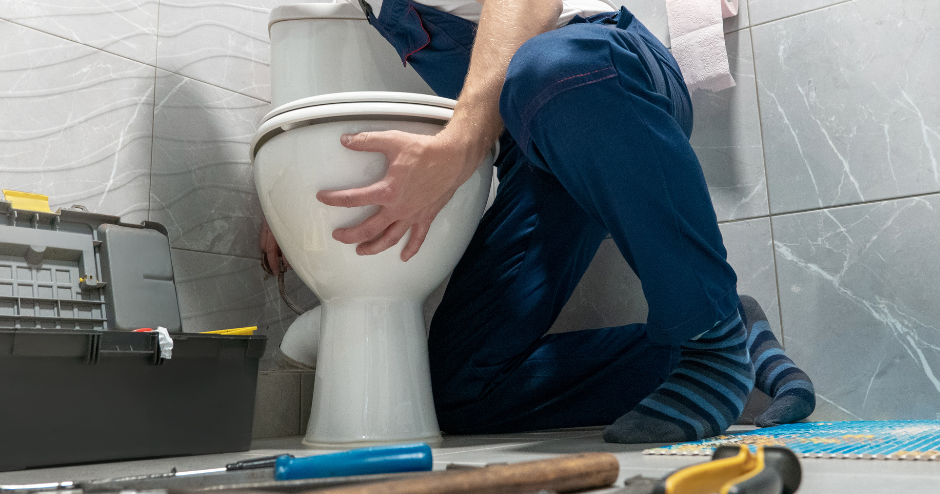
A toilet that runs continuously is one of the most common and wasteful household leaks. The flapper valve inside the tank wears out over time and allows water to slowly drain from the tank into the bowl. This can waste between 200 and 500 gallons per day depending on how badly the flapper is failing. The leak is often silent enough that homeowners never notice it without listening carefully or checking the meter.
A simple way to check for a running toilet is to put a few drops of food coloring in the tank and wait 15 minutes without flushing. If color appears in the bowl, the flapper is leaking.
Appliance Supply Lines
Refrigerator ice maker lines, dishwasher connections, and washing machine supply hoses all have a limited lifespan. Rubber supply hoses on washing machines are particularly prone to slow failure and sudden rupture. A hose that has been in place for more than five years is worth inspecting closely. A slow drip from one of these connections can go undetected for months, especially if the appliance is against a wall where the back isn't easily visible.
Our post on the most common places water damage starts in Post Falls homes that homeowners rarely check covers appliance supply lines and several other frequently overlooked leak sources in detail.
Irrigation Systems
In North Idaho, irrigation systems run seasonally and often go uninspected from one year to the next. A cracked line, a failed head, or a valve that isn't closing completely can run up your water bill significantly during the irrigation season. Because the system is underground and outside, homeowners often don't notice the leak until it shows up on their bill.
When you turn your irrigation system on for the season, walk the full system and observe each zone actively running. Look for areas where water is pooling on the surface, unusually green patches of grass, or heads that aren't performing as expected. These are signs that water is going somewhere it shouldn't.
Slab Leaks
Slab leaks occur when water supply or drain lines running beneath a concrete foundation develop a leak. They're harder to detect than other leaks because the water often doesn't surface visibly for a long time. Signs of a slab leak include warm spots on the floor, unexplained water sounds when no fixtures are running, cracks in flooring or baseboards, and a water bill that keeps climbing without explanation.
Slab leaks almost always require a professional to locate and repair. If you've confirmed a leak with your meter but can't find it in any visible location, a slab leak is a real possibility worth having a plumber investigate.
What to Do Once You Suspect a Hidden Leak
Once your water bill or meter test suggests a leak, the sequence of steps matters. Acting quickly limits how much damage accumulates.
• Start with the meter test described above to confirm water is actively leaving the system
• Check the easiest and most common locations first: toilets, under sinks, behind appliances
• Look for visible signs of moisture: staining on ceilings or walls, soft flooring, musty odors
• Check the crawlspace if your home has one, looking for standing moisture or wet soil
• If you can't find the source yourself, call a plumber for supply line issues or a restoration professional for
moisture mapping
The key thing to avoid is waiting. A leak that seems minor based on your bill can be causing significant hidden damage at the same time. Water moves through building materials quickly and often travels well beyond where the leak originates before becoming visible.
Our post on what happens if water damage is left untreated for 30, 60, or 90 days explains in detail how damage escalates over time. What starts as a manageable repair at 30 days can become a significant structural and mold problem by 90 days.
How Water Utilities in Post Falls and Coeur d'Alene Can Help
Both the City of Post Falls and the City of Coeur d'Alene have utility departments that can assist homeowners who suspect a leak. If you contact your water utility and explain that you believe you have a hidden leak, most utilities will review your usage history with you and in some cases send a technician to check the meter and the service line from the street to the house.
Some utilities also offer leak adjustment programs. If you discover and repair a leak and your bill shows a clear spike as a result, you may be able to apply for a one-time credit on your account. It's worth asking your utility directly whether this option is available.
Knowing your utility's emergency line is also useful. If you ever locate a leak and can't get it stopped, or if a burst pipe causes flooding, your water utility can shut off service at the street connection while you get the situation under control.
For guidance on what to do when a pipe actually bursts and water is actively entering the home, our post on what North Idaho homeowners should do in the first 24 hours after a pipe bursts walks through the immediate response steps in order.
The Bigger Picture: Leak Detection as Preventive Maintenance
Most homeowners think about water damage reactively. Something floods, something leaks visibly, something smells off. Checking your water bill proactively every month takes about two minutes and can give you weeks of advance warning before a hidden leak turns into a serious problem.
The USGS Water Science School's research on residential water use provides useful context on what typical household consumption looks like and how to interpret deviations from the norm. Understanding your baseline makes it much easier to spot when something has changed.
Building a habit of reviewing your bill monthly, running a meter test twice a year, and doing a quick visual inspection of the areas where leaks most commonly start puts you well ahead of most homeowners in terms of moisture management. In North Idaho's climate, where freeze-thaw cycles, snowmelt seasons, and humidity from the lake all work against residential plumbing over time, that kind of proactive attention pays off.
Water damage doesn't always announce itself loudly. Sometimes it shows up quietly on your water bill first. When you start treating that bill as a health check for your home's plumbing, you give yourself the best possible chance of catching problems before they become expensive.
Final Thoughts
Your water bill is more than a monthly expense. It's one of the most reliable early warning systems available to a homeowner, and it costs nothing extra to pay attention to it. A spike you can't explain, a slow upward trend over several months, or a meter that moves when everything is turned off are all signals worth taking seriously before they turn into damaged subfloors, mold in wall cavities, or a crawlspace full of moisture.
In Post Falls and Coeur d'Alene, hidden leaks are a year-round risk. Cold winters stress plumbing. Freeze-thaw cycles expand and contract pipe joints. Older homes have supply lines that are well past their expected service life. Catching a leak through your water bill is genuinely one of the simplest and most effective things you can do to protect your home from water damage.
When did you last take a close look at your water usage history and ask yourself whether the numbers are telling you something?