
The hidden leak points in North Idaho homes that quietly cause mold and structural damage
When most people think about water damage, they picture a burst pipe flooding the kitchen or a basement filling with water after a storm. But in reality, most water damage in homes doesn’t start dramatically. It starts quietly, in places homeowners rarely inspect.
By the time the damage becomes visible, it’s often been developing for weeks or even months.
In North Idaho’s climate where snowmelt, freeze thaw cycles, and seasonal humidity all play a role, small hidden leaks can turn into mold growth and structural problems faster than you’d expect.
Behind Refrigerator Water Lines
One of the most overlooked sources of water damage is the small water supply line behind a refrigerator.
Ice maker lines can crack, loosen, or develop pinhole leaks. Because the leak is slow and hidden, moisture often accumulates beneath flooring and inside wall cavities before anyone notices.
The Insurance Information Institute has reported that appliance related water damage is one of the most common homeowners insurance claims nationwide. These aren’t dramatic floods they’re small leaks that go undetected.
In homes with hardwood or laminate flooring, the first sign is often subtle warping near the fridge. By then, moisture may already be sitting underneath the subfloor.
Under Bathroom Tubs and Showers
Bathrooms are designed to handle water, but the plumbing underneath them isn’t always visible.
Common failure points include:
- Drain seals beneath bathtubs
- Caulking that has separated along shower edges
- Cracked grout allowing slow seepage
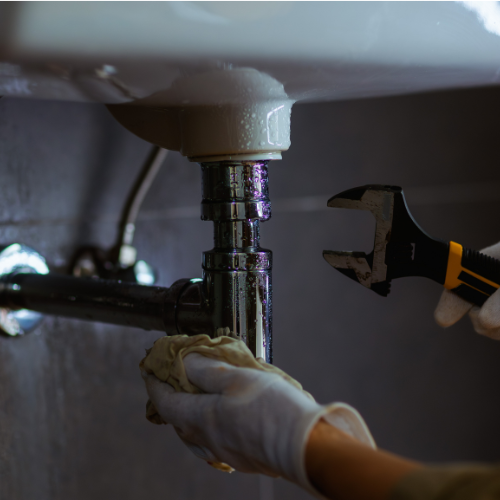
- Loose supply fittings behind vanities
Because these leaks are slow, water often collects inside subfloor cavities. Over time, this can cause soft flooring, mildew odors, and even structural weakening.
The National Association of Home Builders (NAHB) has long emphasized that bathrooms are among the most moisture prone areas of a home due to constant exposure and complex plumbing systems.
Around Window Wells and Basement Windows
In Post Falls, spring snowmelt and heavy seasonal rain can overwhelm poorly drained window wells.
If the well fills with water and drainage is inadequate, moisture seeps into:
- Basement walls
- Framing around window openings
- Insulation behind drywall
Homeowners often don’t notice until they see staining below a window or smell something musty weeks later.
According to FEMA flood mitigation guidance, improper drainage around window wells is a common contributor to localized basement water intrusion even outside designated flood zones.

Inside Wall Cavities Under Roof Valleys
Roof leaks don’t always drip into the middle of a room. Sometimes water enters near roof valleys where two roof slopes meet and travels along framing inside the wall before showing any signs.
By the time staining appears on drywall, moisture may have already affected insulation and wood framing.
The Building Science Corporation has documented how water can travel surprisingly far inside wall assemblies before becoming visible, especially in tightly sealed modern homes.
Around Garage Slab Edges
Garages in North Idaho take a beating during winter. Snow, ice melt, and vehicle runoff bring moisture inside repeatedly.
Over time, water can seep along slab edges and into adjoining framing or foundation areas. Because garages aren’t conditioned spaces, dampness often lingers longer than homeowners expect.
Small foundation cracks at slab edges can become entry points for water during spring thaw, contributing to crawlspace or lower-level moisture problems.
Why These Areas Go Unchecked
Most of these leak points are hidden behind appliances, under flooring, or inside walls. They don’t draw attention until secondary damage appears.
The Environmental Protection Agency (EPA) has consistently stated that mold problems are directly tied to moisture problems, not necessarily flooding. That means even small, persistent leaks can lead to significant indoor air quality concerns if left untreated.
And in many Post Falls homes, homeowners simply don’t think to check these areas until something smells off or looks warped.
Early Warning Signs You Shouldn’t Ignore
If water damage is starting somewhere hidden, your home may show subtle clues:
- A faint musty smell that doesn’t go away
- Slight buckling in flooring
- Peeling paint near baseboards
- Increased indoor humidity
- Soft drywall around windows or bathrooms
These symptoms often get blamed on seasonal moisture, but they’re sometimes the early signs of something more serious.
Conclusion
In Post Falls and Coeur d’Alene homes, water damage rarely begins with a dramatic flood instead, it often starts behind appliances, beneath bathrooms, near window wells, or along garage slab edges where homeowners rarely look, slowly spreading moisture until visible damage finally appears, so when was the last time you checked the places in your home that no one ever thinks to inspect?