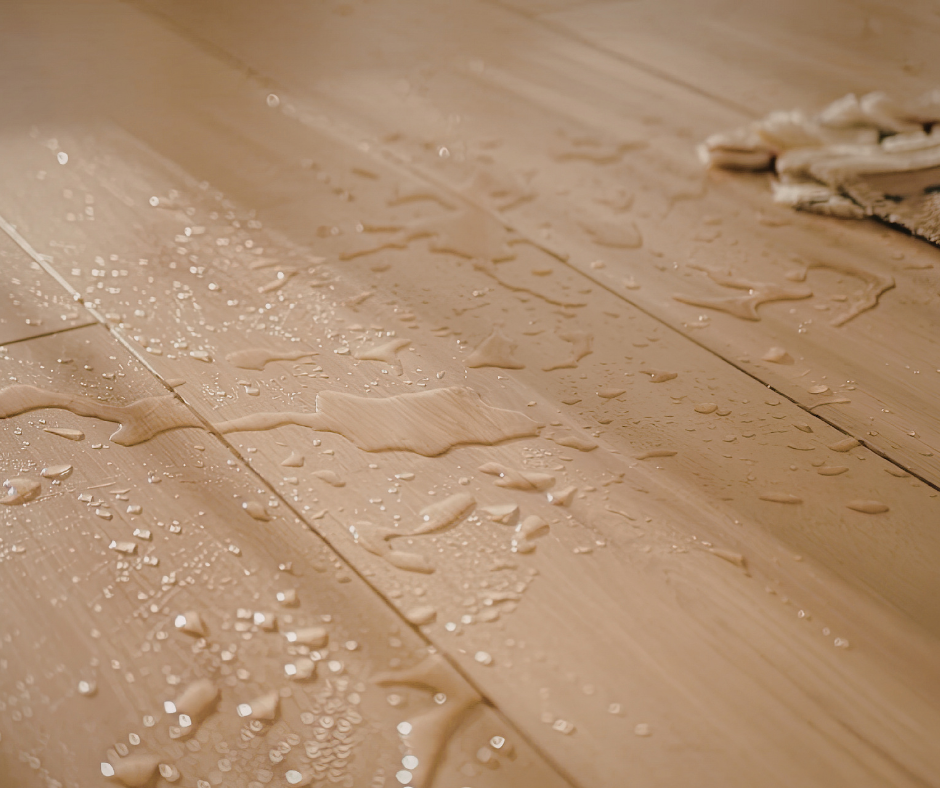

What freeze-thaw cycles, ice loads, frost heave, and repeated seasonal moisture exposure do to the roofs, foundations, plumbing, and framing of North Idaho homes over time.
By Matthew Ratautas | DryMax Restoration | June 2026
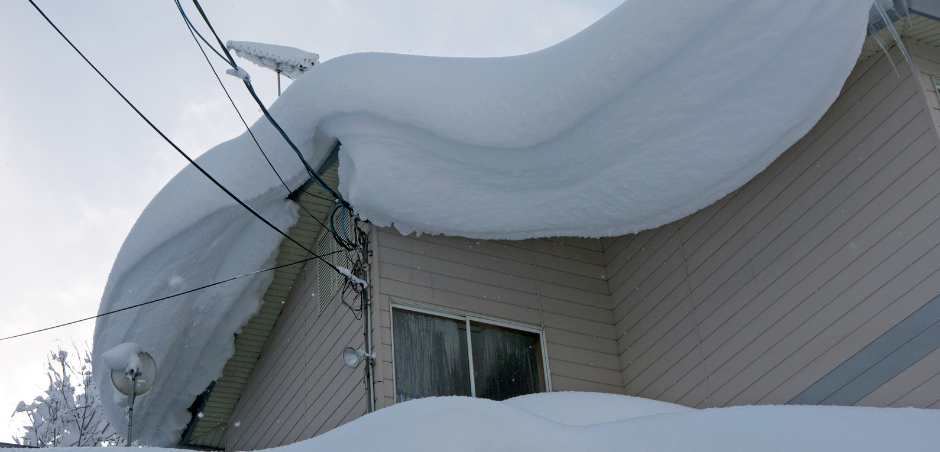
North Idaho winters are genuinely hard on homes. Not just in the obvious ways, like frozen pipes or ice dams, but in slower, more cumulative ways that don't become visible until years of seasonal stress have added up to something that can no longer be ignored. Post Falls and Coeur d'Alene homeowners often talk about winter as something to get through. They don't always think about what that same winter is doing to their foundation, their roof framing, their concrete flatwork, or the moisture content of the structural wood beneath their floors.
This post takes a broader look at what repeated hard winters actually do to a home's structural integrity over time. Not the burst pipe or the ice dam that announces itself dramatically, but the slow, compounding effects of freeze-thaw cycling, frost heave, ice loading, and persistent winter moisture that accumulate season after season and show up eventually as cracks, settlement, rot, and water intrusion that seems to come from nowhere.
Understanding these mechanisms helps homeowners in Kootenai County recognize the signs earlier, make better maintenance decisions, and avoid the kind of structural problems that tend to be expensive precisely because they were allowed to develop over many winters before anyone noticed.
The Freeze-Thaw Cycle: The Most Underestimated Force on a Home
Of all the winter forces that affect homes in Post Falls and Coeur d'Alene, the freeze-thaw cycle is the most persistent and, over time, often the most damaging. It doesn't make noise. It doesn't flood a room. It just works, day after day and week after week, expanding and contracting everything it touches.
Water expands by approximately nine percent when it freezes. In a hard winter with repeated cycling between freezing and above-freezing temperatures, any water that has infiltrated a crack, a joint, a pore in concrete, or a gap between building materials freezes, expands, widens the gap slightly, thaws, allows a little more water in, and then freezes again. Over a single season this might produce a hairline crack. Over ten seasons it can produce a structural problem.
This mechanism affects virtually every external material on a home: concrete foundations, driveways, sidewalks, masonry, roofing materials, caulked joints, window frames, and the wood siding or trim that interface with exterior conditions. Each material responds differently, but all of them are subject to the cumulative widening effect of repeated freeze-thaw cycling.
Research from the USGS on frozen ground and seasonal frost documents how soil moisture content at freezing determines the depth and intensity of seasonal frost penetration, which directly affects how much movement and stress building foundations experience during each winter cycle. Kootenai County's combination of moisture-laden soil and extended freeze periods creates conditions where frost penetration is both deep and repeated across many cycles per season.
What Frost Heave Does to Foundations and Concrete
Frost heave is the upward movement of soil caused by the formation of ice within it during freezing conditions. As water in the soil freezes and expands, it can exert significant upward pressure on anything sitting on or in the ground, including foundations, concrete slabs, sidewalks, driveways, and buried utility lines.
In North Idaho, where soil moisture is generally high and winter temperatures regularly push the frost line well below the surface, frost heave is a meaningful and recurring structural concern. A foundation that was poured correctly and sits below the local frost line should be largely protected from heave. But concrete flatwork such as driveways, sidewalks, and patio slabs that sits at or near grade is fully exposed to heave forces every winter.
Driveway and Sidewalk Damage
The uneven, cracked concrete so common in older Coeur d'Alene and Post Falls neighborhoods is largely the product of years of frost heave. Sections of concrete that were poured as one continuous surface shift at different rates as the soil beneath them heaves unevenly. The result is differential settlement, where one section of concrete rises or drops relative to the section next to it, producing the raised edges and sunken panels that become tripping hazards and water collection points.
Water that pools in the low spots created by differential heave doesn't drain properly. It sits, it infiltrates the soil beneath, and it contributes to the moisture conditions that drive further heave in subsequent winters. Each season of pooling and heaving extends the settlement pattern outward.
Foundation Movement and Cracking
Foundations in Kootenai County are designed to sit below the local frost depth, typically 36 inches or more, to avoid direct heave forces on the footing. But the soil around a foundation still moves with freeze-thaw cycling, and that movement creates lateral pressure against foundation walls that can contribute to horizontal cracking, bowing, and the gradual separation of wall sections from footings over time.
Older homes in established Post Falls and Coeur d'Alene neighborhoods are particularly susceptible to this kind of cumulative foundation movement. A foundation that has experienced 40 or 50 winters of frost cycling has absorbed a significant amount of lateral stress, and the cracks that appear in those walls are rarely the result of a single event. They're the accumulated record of many winters.
Foundation cracking creates direct water intrusion pathways. Our post on why basements flood in Post Falls Idaho and how to prevent it covers how foundation conditions relate to basement flooding and what homeowners can do to address both the cracks and the water that enters through them.
Ice Dams and What They Actually Do to a Roof Over Time
Ice dams are one of the most visible and well-known winter roofing problems in cold climates, and they're common in Post Falls and Coeur d'Alene. Most homeowners understand at a basic level that ice dams can cause leaks. What they often don't appreciate is the cumulative structural damage that repeated ice dam formation causes to roof assemblies over multiple winters.
The National Roofing Contractors Association's guidance on ice dam prevention describes ice dams as a common roof performance problem in buildings that experience snowfall and extended below-freezing temperatures, and notes that when ice dams occur, water can be forced under roofing material and cause long-term damage to structural components. The NRCA's research confirms that the combination of roof pitch, insulation above the exterior wall, and air sealing at the wall-roof transition all affect ice dam formation and the structural consequences that follow.
How Ice Dams Form and Why They Matter
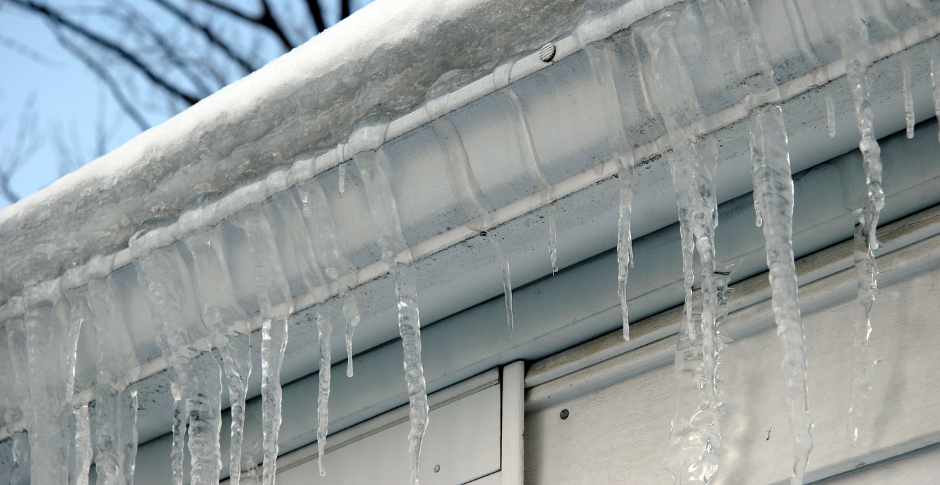
Ice dams form when heat from the home escapes through the roof, warming the upper roof surface and melting snow, while the lower portion of the roof near the eaves remains below freezing. The meltwater flows down the roof slope, reaches the cold eave section, and freezes. As ice accumulates, it creates a dam that traps subsequent meltwater, which then backs up under the shingles and into the roof assembly.
A single ice dam event may produce only a small amount of water intrusion that dries out and seems to leave no lasting damage. But a home that forms significant ice dams every winter for ten or fifteen years is accumulating moisture in the roof decking, the attic framing, and the wall top plates at the eave every single season. That cumulative moisture exposure produces exactly the conditions that lead to rot in roof framing and mold in attic spaces.
The Connection Between Ice Dams and Attic Moisture
Ice dams and attic condensation are often occurring simultaneously in the same home. The same inadequate insulation and air sealing that allows heat to escape and create ice dams also allows warm, humid indoor air to enter the attic and condense on cold surfaces. Our post on why attic condensation in North Idaho homes is a hidden water damage problem most homeowners miss covers the attic moisture side of this equation in detail. In many North Idaho homes, ice dams on the outside and condensation on the inside are two faces of the same underlying problem.
Snow Loads and Structural Stress on Roof Framing
North Idaho snowfall events can produce significant accumulation on roofs, and the structural load that snow places on roof framing is a consideration that homeowners often don't think about until a situation becomes alarming.
Most residential roofs in Post Falls and Coeur d'Alene are designed to handle the local ground snow load, which the building code translates into a roof snow load based on the slope and exposure of the roof. A properly designed and constructed roof should handle typical seasonal snowfall without structural concern.
The risk increases in several specific situations. Roofs with low slopes accumulate snow faster because less slides off. Roofs with valleys where snow drifts accumulate can see loads far exceeding the average across the roof surface. Roofs that were not built to current code, which is common in older homes in established neighborhoods, may have framing members that are undersized by today's standards for the actual snow loads the region produces.
Beyond the load itself, the repeated wet-dry cycling that snow on a roof produces throughout winter affects the moisture content of the roof decking and framing. Snow that partially melts and refreezes deposits moisture into the roof assembly. Over a long winter with many cycles of this kind, the moisture content of roof framing and decking can rise to levels that support mold growth and accelerate wood degradation.
What Hard Winters Do to Plumbing Over Time
The acute version of winter plumbing damage is a burst pipe, which announces itself immediately and dramatically. The chronic version is the slow degradation of plumbing systems through repeated thermal cycling, hard water mineral buildup accelerated by temperature stress, and the vibration and movement that freeze-thaw cycling introduces to pipe joints and fittings.
Supply line fittings that are repeatedly subjected to the slight movement caused by thermal expansion and contraction develop micro-fatigue at their joints over time. What was a tight, leak-free connection in year one may have developed enough movement by year fifteen that it seeps slightly under normal operating pressure. That seep is invisible until it's been depositing moisture into a wall cavity or under a cabinet for long enough to produce staining or mold.
Hard water in Kootenai County accelerates this process. Our post on why hard water in Kootenai County can lead to hidden pipe damage and mold growth explains how mineral scale buildup interacts with pipe materials and joints in ways that increase failure risk over time. In older homes where original plumbing has been through both hard winters and hard water for decades, the cumulative risk is considerably higher than it might appear.
Crawlspace and Subfloor Moisture Accumulation Over Winter
Crawlspaces in Post Falls and Coeur d'Alene homes face a specific winter moisture challenge that is distinct from the acute flooding events more commonly discussed. Even when no water enters the crawlspace as liquid, winter brings conditions that allow moisture to accumulate in crawlspace framing and insulation through condensation and vapor migration.
When outdoor temperatures are very cold and the crawlspace is poorly insulated or ventilated, the temperature difference between the crawlspace air and the cold exterior creates condensation on floor joists, pipe surfaces, and vapor barriers. That condensation deposits moisture onto wood framing surfaces consistently over the course of a winter. Over several winters, the cumulative moisture exposure raises the moisture content of framing wood to levels that support mold growth and wood degradation.
In spring, when snowmelt raises groundwater levels, crawlspaces in lower-lying areas of Post Falls and Coeur d'Alene face a second wave of moisture from below. A crawlspace that enters spring with elevated framing moisture from winter condensation then receives additional moisture from seasonal groundwater, creating conditions where wood degradation and mold establishment can progress rapidly.
Our post on why crawlspaces in North Idaho homes stay wet long after winter ends covers the full seasonal cycle of crawlspace moisture in North Idaho, including why crawlspaces that seem dry in fall often show elevated moisture in late spring and why that pattern matters for structural health.
The Cumulative Picture: What Multiple Hard Winters Add Up To
Each of the mechanisms described above operates on its own timeline. A single freeze-thaw cycle widens a concrete crack by a fraction of a millimeter. A single winter of ice dam formation deposits a small amount of moisture into attic framing. A single season of crawlspace condensation raises wood moisture content slightly. None of these individual events is catastrophic.
But after ten or fifteen winters, the concrete crack is now a drainage problem. The attic framing has accumulated enough moisture history to support mold. The crawlspace subfloor has enough repeated moisture exposure that the wood is beginning to show degradation. And the foundation walls have absorbed enough lateral frost pressure that hairline cracks have become visible separations.
This is the pattern we see repeatedly in older homes across Post Falls, Coeur d'Alene, and surrounding Kootenai County communities. The structural problems that homeowners discover during renovation, sale inspections, or when something finally fails visibly are almost never the product of a single bad winter. They are the accumulated product of many winters, each of which added a small increment of stress or moisture that compounded over time.
Our post on why older homes in Coeur d'Alene and Post Falls are at higher risk for hidden water damage covers how aging building systems and decades of winter exposure intersect to create the elevated hidden moisture risk that's so common in established North Idaho neighborhoods.
What Homeowners Can Do to Limit Winter Structural Damage
Understanding the mechanisms of winter stuctural stress is useful primarily because it points toward practical interventions that actually reduce risk.
• Maintain proper attic insulation and air sealing to reduce heat loss through the roof deck, which is the primary driver of ice dam formation
• Keep gutters clear heading into winter so meltwater can drain rather than back up and freeze at the eave
• Seal visible concrete cracks in driveways, sidewalks, and foundation walls before winter to limit the freeze-thaw infiltration that widens them
• Inspect crawlspace vapor barriers annually and repair tears or gaps that allow soil moisture to evaporate into the framing above
• Ensure crawlspace insulation is secured between floor joists and hasn't fallen, leaving subfloor exposed to cold and moisture
• Insulate exposed pipes in crawlspaces and exterior walls before the first hard freeze to prevent both acute burst events and the chronic fatigue from thermal cycling
• Have a professional moisture assessment done if you haven't looked at crawlspace and attic framing conditions in several years, particularly in homes over 20 years old
Our post on how Spokane Valley homeowners can prevent water damage before winter hits covers many of these same pre-winter steps in a practical checklist format. While focused on Spokane Valley, the same preparation applies directly to Post Falls and Coeur d'Alene homes facing identical winter conditions.
When to Get a Professional Assessment
Some winter structural damage becomes visible on its own in the form of new cracks, ceiling stains, soft flooring, or musty odors. But the most costly problems, the ones that have been developing quietly in attic framing, crawlspace joists, and inside foundation walls, don't produce visible signs until the damage is already significant.
A professional moisture assessment using thermal imaging and moisture meters can identify elevated moisture conditions in structural framing before visible damage has developed. For homes in Post Falls and Coeur d'Alene that have been through many hard winters without this kind of assessment, the exercise often reveals conditions that are well worth addressing before they become more expensive problems.
The IICRC's Water Damage Restoration Technician certification trains restoration professionals specifically in the assessment of moisture conditions in building materials, including the use of moisture meters and thermal imaging to identify hidden moisture in structural assemblies. Working with IICRC-certified technicians for a pre-season moisture assessment means the evaluation is done to professional standards with appropriate documentation.
If your home is more than 15 to 20 years old and you haven't had a professional look at the crawlspace framing, attic conditions, and foundation walls in recent memory, the end of winter is an ideal time to have that assessment done. The moisture conditions from the season that just passed are still present and measurable, which means the assessment captures winter's impact while it's still fresh rather than after a dry summer has obscured it.
Final Thoughts
Hard winters in Post Falls and Coeur d'Alene are a fact of life, and most homeowners accept them without thinking much about what each winter adds to the cumulative structural history of their home. Freeze-thaw cycling widens concrete cracks season by season. Ice dams deposit moisture into roof assemblies each winter they form. Frost heave shifts flatwork gradually over years. Crawlspace condensation builds moisture in framing that never quite has time to fully dry before the next winter cycle begins.
None of this is cause for alarm on its own. North Idaho homes are built to handle the climate, and most of them hold up well over many decades with reasonable maintenance. But the homes that hold up best are the ones where owners pay attention to the cumulative effects of winter, address small problems before they compound, and get professional assessments in the areas where damage develops invisibly.
After the winter your home just went through, do you know what's actually going on in the parts of your home that winter stresses most?






How to Document Water Damage for an Insurance Claim: A Step-by-Step Guide for North Idaho Homeowners