
What photos to take, what information to record, what mistakes to avoid, and how Post Falls and Coeur d'Alene homeowners can build a strong documentation trail that supports their water damage claim from the very first minute.
By Matthew Ratautas | DryMax Restoration | May 2026
Water damage is stressful enough on its own. Filing an insurance claim while dealing with wet floors, displaced furniture, and an uncertain timeline adds another layer of pressure that most homeowners aren't prepared for. And one of the most common mistakes people make in that situation is cleaning up before they document.
That single mistake, moving things, pulling up wet carpet, or tossing damaged items before the photos are taken, can significantly weaken a claim or leave money on the table that you were entitled to. Insurance adjusters determine claim value based on evidence. The better your documentation, the stronger your claim.
This guide walks Post Falls, Coeur d'Alene, and Spokane homeowners through exactly how to document water damage for an insurance claim, in the right order, with the right level of detail, so you don't find yourself scrambling to reconstruct a timeline after the fact.
Step 1: Don't Clean Up First — Document Before You Touch Anything
The most important rule of water damage documentation is sequence. You document first and clean up second. This is harder than it sounds when there's standing water on your floor and you want to start putting things right. But the evidence you capture before any cleanup begins is the foundation of your entire claim.
Once carpet is pulled, damaged items are moved outside, or cleanup equipment starts running, the visible scope of the damage begins to change. Adjusters and claims processors who review your file need to see what the damage looked like at its worst, before any mitigation work changed the picture.
The FEMA National Flood Insurance Program claims guidance specifically advises homeowners to photograph and video damaged property, including items they plan to discard, before removing or discarding anything. The same principle applies to all water damage claims, not just flood events.
Give yourself 10 to 15 minutes to document before you start cleanup. It's one of the highest-return investments of time you can make in the entire claims process.
Step 2: Record Video First, Then Take Photos
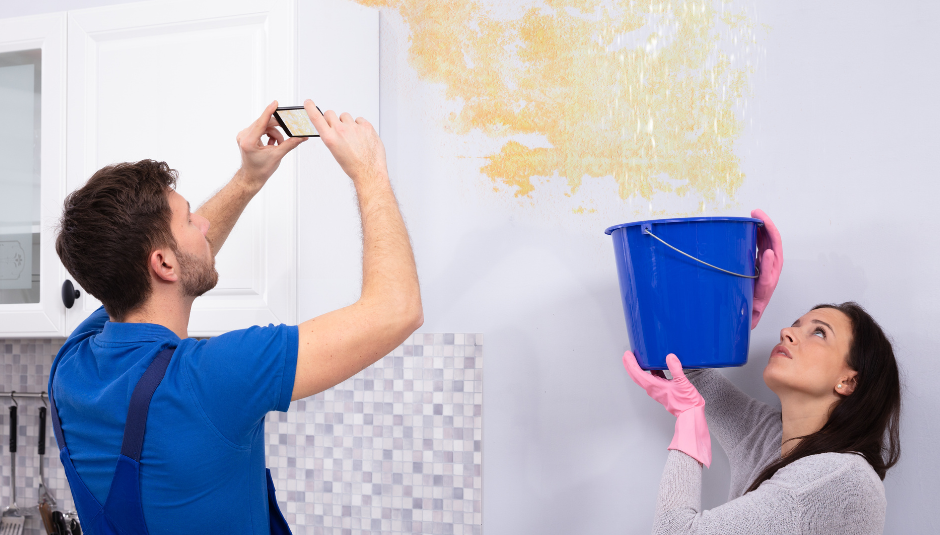
Start with video. Walk through every affected room and record continuously, narrating as you go. Describe what you're seeing, where the water came from if you know, how far it has spread, and what materials are affected. Video captures context and continuity that still photos alone can't replicate. An adjuster watching a walkthrough video gets a clearer picture of the scope than they would from reviewing 30 individual photos.
After video, take still photos. Photos allow you to capture specific details at higher resolution than video typically provides. Focus your photos on:
• The source of the water damage, whether that's a burst pipe, a failed appliance connection, a ceiling leak, or a flooded basement entry point
• Standing water on floors, showing the extent and depth
• Water lines on walls showing the height the water reached
• Staining on ceilings, walls, and floors
• Damaged flooring materials, including any areas that are soft, warped, or buckled
• Damaged personal property including furniture, electronics, clothing, and stored items
• The water meter reading if you can access it safely
Photograph every affected room from multiple angles. Wide shots establish context. Close-up shots capture specific damage details. Both types are useful to adjusters.
Step 3: Photograph Appliances and Equipment with Identifying Information
For any appliances or mechanical equipment involved in or damaged by the water event, photograph the model number, serial number, and brand label. This information is used to establish replacement value for damaged items.
For appliances that caused the damage, such as a washing machine that overflowed or a water heater that failed, the same identifying information helps the adjuster understand the age and condition of the equipment and whether the failure was sudden or the result of deferred maintenance. This distinction can matter for coverage.
Common items to photograph with identifying labels include:
• Washing machine and dryer
• Refrigerator and dishwasher
• Water heater
• HVAC equipment if affected
• Sump pump if it failed or was overwhelmed
• Any electronics damaged by water contact
Step 4: Create a Written Inventory of Damaged Personal Property
In addition to photos and video, create a written inventory of every damaged personal property item. This list becomes the basis for the personal property portion of your claim, which is separate from the structural damage portion.
For each item, record:
• Item description and brand if known
• Approximate age or purchase date if you can recall it
• Original purchase price if you have any record of it
• Current estimated replacement value
• Whether you have any receipts, credit card statements, or other purchase records
Don't underestimate the personal property component of a water damage claim. Furniture, rugs, clothing, electronics, books, documents, and stored items in basements and crawlspaces all have value that your policy may cover. A thorough inventory protects that value.
If you have receipts, warranty cards, or credit card statements that show purchase dates and prices for any damaged items, gather those together. They strengthen your personal property documentation considerably.
Our post on how to file an insurance claim for burst pipes and flood damage covers the full claims process in detail, including what your adjuster will be looking for and how to communicate effectively with your insurance company throughout the process.
Step 5: Record the Timeline Accurately
Write down the timeline of events as accurately as you can while it's fresh. Include:
• The date and approximate time you discovered the damage
• What you were doing when you noticed it
• What the first visible sign of damage was
• Whether the source was still active when you found it and when you were able to stop it
• The date and time you called your insurance company
• The date and time any professional services were contacted or arrived
This timeline matters because some coverage questions hinge on how quickly the event was discovered and addressed. A burst pipe that flooded a room over eight hours while you were at work is treated differently in some policy language than one that was discovered and stopped within minutes. Accurate timeline documentation protects you from assumptions adjusters might otherwise make.
Write this down the same day. Human memory is unreliable under stress, and the details become harder to reconstruct accurately even 24 hours later.
Step 6: Document Every Conversation with Your Insurance Company
From the moment you make your first call to your insurance company, keep a log of every conversation. Record:
• The date and time of each call or communication
• The name and title of who you spoke with
• What was discussed and what was agreed to or promised
• Any claim numbers, reference numbers, or authorization numbers given
Insurance claims involve multiple people across different departments, and verbal agreements made by one representative aren't always reflected in the file automatically. Having your own record of what was said, when, and by whom protects you if there's a discrepancy later in the process.
Follow up significant phone conversations with an email summarizing what was discussed. This creates a written record tied to a timestamp and establishes a paper trail for the substance of your conversations.
Step 7: Photograph the Restoration Process Throughout
Documentation doesn't end when the cleanup crew arrives. Continue photographing throughout the mitigation and restoration process. This includes:
• Equipment placement when air movers and dehumidifiers are set up
• Any controlled demolition or material removal, including flood cuts in drywall and removed flooring
• Exposed wall cavities, subfloor, or framing after materials are removed
• Any visible mold discovered during demolition
• The condition of materials before they are disposed of
This ongoing documentation serves a few purposes. It supports your claim by showing the scope of the mitigation work. It creates a record of conditions inside wall cavities that the adjuster may never see in person. And it protects you if questions arise later about whether certain work was actually necessary.
Understanding what the mitigation and restoration process involves helps you know what to document at each stage. Our post on the difference between water mitigation and water restoration explains each phase and what typically happens during each one.
Step 8: Save Everything Until the Claim Is Fully Settled
Do not throw away damaged materials, receipts, or any documentation related to the claim until you have received final settlement and are satisfied with the outcome. This includes:
• Damaged flooring samples if they were removed
• Any damaged personal property items that are borderline on salvageability
• All receipts for emergency expenses including temporary lodging, meals if displaced, or emergency supplies
• All contractor invoices and work orders
• All communications with your insurance company
• Your own photos and video files, backed up in at least two locations
Receipts for additional living expenses incurred because your home was uninhabitable during restoration are often reimbursable under loss of use coverage. Keep every receipt from hotels, meals, and other expenses you wouldn't have had if the damage hadn't occurred.
Common Documentation Mistakes to Avoid
Beyond the steps above, there are several specific mistakes that weaken water damage insurance claims in North Idaho and Spokane.
Disposing of Damaged Items Too Quickly
Even items that are clearly ruined should be documented before disposal. An adjuster who never sees a damaged item has only your description and photos to establish its value. Keep damaged items until your adjuster or restoration company has had a chance to document them, or at minimum photograph them extensively before disposal with identifying information visible.
Failing to Document Hidden Damage
Water damage that isn't visible to the eye, moisture inside walls, under flooring, or in crawlspaces, needs to be documented by the professional restoration team using moisture meters and thermal imaging. Make sure your restoration company provides you with the moisture mapping data from their initial assessment. This documentation captures damage that your own photos couldn't show.
Our post on what happens if water damage is left untreated for 30, 60, or 90 days explains how hidden moisture damage progresses over time. The moisture mapping documentation captures this hidden damage before it becomes visible, which is often when it becomes much more expensive.
Not Keeping Copies of Everything
Submit originals or copies to your insurance company as required, but always retain your own copies of every document, photo, and invoice. Claims can take months to resolve, involve multiple adjusters, and occasionally lose documents. Your own organized file is your protection throughout the process.
Waiting Too Long to File
Most homeowner's insurance policies have notification requirements that expect you to report a claim promptly after discovering damage. Waiting days before calling your insurer, particularly if you've already started cleanup, can complicate coverage. Call your insurance company the same day you discover significant water damage, even if you're still assessing the scope.
The IICRC S500 Standard for Professional Water Damage Restoration emphasizes that time is one of the most critical factors in limiting damage after a water event. The same urgency applies to your insurance claim. Early notification, thorough documentation, and prompt professional response all work together to produce the best possible outcome.
What Your Adjuster Is Actually Looking For
Understanding what an insurance adjuster needs helps you build documentation that works rather than documentation that just looks thorough.
Adjusters are evaluating two primary things: the cause of the damage and the scope of the damage. Cause determines coverage. Scope determines claim value.
For cause, adjusters look for evidence that the damage resulted from a covered event, such as a sudden pipe failure, an appliance malfunction, or storm-related water intrusion, rather than a gradual leak, flood from external water, or deferred maintenance issue. Your timeline documentation, photos of the source, and any information about the age and condition of the failed component all feed into this determination.
For scope, adjusters look for comprehensive evidence of everything affected: every room, every material, every piece of damaged personal property. Gaps in your documentation become gaps in your claim. Areas you didn't photograph, items you didn't list, expenses you didn't document are all potential coverage you leave on the table.
Working with an IICRC-certified restoration company helps on the scope side because their professional moisture documentation, drying logs, and final reports provide adjuster-ready evidence of the technical scope of the damage. Our post on how to find a trustworthy water damage restoration company in North Idaho covers what to look for in a restoration company and why their documentation practices matter for your claim.
Final Thoughts
Water damage documentation is not glamorous work, but it is some of the most financially important work you'll do during the entire claims process. The homeowners who recover the most from water damage claims are almost never the ones with the worst damage. They're the ones who documented thoroughly, filed promptly, kept their records organized, and worked with restoration professionals who provided adjuster-ready documentation alongside their technical work.
In North Idaho and the Spokane area, where water damage events from burst pipes, appliance failures, and seasonal moisture are a regular occurrence, knowing how to document correctly before you ever need to is one of the smartest things a homeowner can do.
If water damage happened in your home tonight, would you know exactly what to document, in what order, and where to find your policy number to make that first call?