How commercial building systems, business interruption costs, tenant-landlord liability, and regulatory requirements make water damage restoration in Spokane Valley and North Idaho commercial properties a fundamentally different challenge than residential restoration.
By Matthew Ratautas | DryMax Restoration | May 2026
Water damage in a home is disruptive. Water damage in a commercial property is disruptive and expensive in ways that most business owners and property managers don't fully anticipate until they're dealing with it. The scope of a commercial water damage event extends well beyond the physical damage to the building. It reaches into business operations, employee productivity, customer access, lease agreements, insurance policies, and regulatory compliance in ways that residential water damage simply doesn't.
Business owners and commercial property managers in Spokane Valley, Post Falls, and Coeur d'Alene who have only dealt with residential water damage before often underestimate what a commercial event involves. The restoration process is longer, the documentation requirements are more detailed, the stakeholders are more numerous, and the financial exposure from delays in getting back to normal is considerably higher.
This post covers the specific ways commercial water damage differs from residential, what business owners and property managers should understand about the process, and what decisions in the early hours of a commercial water event have the biggest impact on the eventual outcome.
The Scale and Complexity of Commercial Building Systems
The most immediate difference between commercial and residential water damage is the complexity of the building systems involved. A residential pipe failure affects a relatively contained area with straightforward plumbing. A commercial building has significantly more complex mechanical systems, and a failure in one can cascade through several others before it's caught.
Larger and More Complex Plumbing Systems
Commercial buildings have plumbing systems designed to serve many more users than a residence. Larger supply lines carry higher water volume. More fixtures and connections mean more potential failure points. In a multi-story commercial building, a pipe failure on an upper floor can quickly affect multiple floors below through ceiling assemblies before anyone on the lower floors has any idea something is wrong.
Commercial plumbing also frequently includes systems that don't exist in residences, such as roof drains that discharge through interior drain lines, fire suppression sprinkler systems, chilled water lines for HVAC, and process water lines for certain types of businesses. Any of these systems can fail, and each failure type requires a different response.
HVAC Systems That Serve Entire Buildings
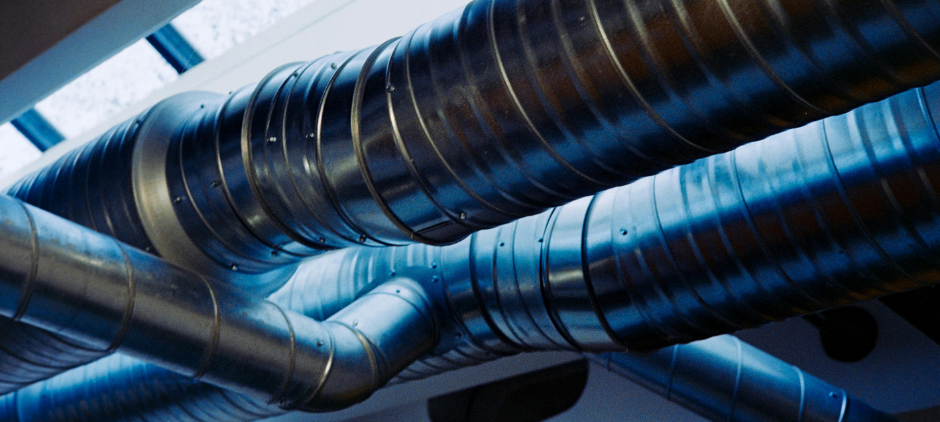
Commercial HVAC systems are significantly more complex than residential systems and create their own water damage risks. Chiller systems, cooling towers, and large air handling units all manage significant volumes of water or refrigerant. Condensate systems in commercial buildings drain much larger volumes than residential systems. A condensate drain failure in a commercial air handler can release water through ceiling plenums that spread it across wide areas of the building before the leak is detected.
Commercial ductwork also runs through more of the building than residential ductwork, which means that water that enters a duct system can be distributed across a much larger affected area than in a home.
Ceiling Plenums and Hidden Infrastructure
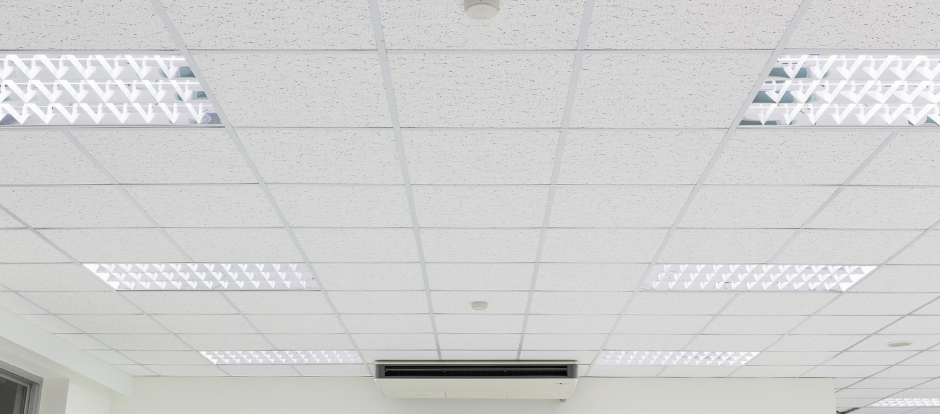
Most commercial buildings use a dropped ceiling system with a plenum space above the visible ceiling tiles. This plenum space contains electrical conduit, data cabling, HVAC ductwork, sprinkler lines, and plumbing runs. When water enters this space from above, it spreads horizontally across the plenum before it becomes visible as a stain on ceiling tiles below. By the time the stain appears, water has often spread well beyond the visible affected area.
Assessing the true scope of water damage in a commercial building requires removing ceiling tiles and accessing the plenum to map where moisture has traveled. This adds time and complexity to the initial assessment compared to a residential inspection.
Business Interruption: The Cost That Exceeds the Physical Damage
In a residential water damage event, the primary cost is the physical damage to the structure and contents. In a commercial water damage event, the physical damage is often the smaller part of the total financial impact. The larger cost is frequently the loss of business income while the affected space is out of operation.
A restaurant that has to close for two weeks while a kitchen water damage event is restored loses not just the cost of the repairs but two weeks of revenue. A medical office that can't see patients, a retail space that can't serve customers, or a warehouse that can't ship product all face financial losses that compound daily while restoration is underway.
This is why response speed matters even more in commercial water damage than in residential. Every hour of delay before extraction and drying begins is not just more physical damage accumulating. It's also more downtime. Professional restoration companies that specialize in commercial work understand this dynamic and structure their response accordingly, bringing more equipment and more personnel to compress the drying timeline.
Our post on commercial water damage in Spokane: what business owners should know before it shuts you down covers the business continuity side of commercial water damage in detail, including what decisions in the first hours have the biggest impact on how long a business is actually out of operation.
Business Interruption Insurance: A Separate and Critical Coverage
Most commercial property insurance policies include business interruption coverage as a separate component from property damage coverage. Understanding the distinction between these two coverages, and how they interact, is essential for any business owner or commercial property manager in Spokane or North Idaho.
Property damage coverage pays for the physical restoration of the building and its contents. Business interruption coverage pays for lost income and ongoing fixed expenses, such as rent, payroll, and utilities, during the period the business cannot operate because of covered damage.
Business interruption claims are more complex to document than property damage claims. They require financial records, income history, and detailed accounting of the revenue that would have been earned during the interruption period but wasn't. The documentation burden for a business interruption claim starts from the moment the damage is discovered. Business owners who maintain organized financial records in an accessible format are in a significantly better position than those who have to reconstruct that information after the fact.
One important nuance: business interruption coverage typically applies during the restoration period until the business can reasonably resume operations, not necessarily until it returns to pre-loss revenue levels. Understanding this distinction helps set realistic expectations about what the coverage is designed to do.
The FEMA's guidance on business continuity planning emphasizes that businesses that plan for interruptions before they occur recover faster and more completely than those that respond reactively. Understanding your business interruption coverage before a claim is one of the most practical forms of that planning.
Tenant and Landlord Liability in Commercial Leases
Commercial water damage becomes more legally complex when the affected property involves a landlord-tenant relationship, which is the case for a large percentage of commercial properties in Spokane Valley and North Idaho. Commercial leases vary considerably in how they allocate responsibility for water damage between building owners and tenants.
What Commercial Leases Typically Say About Water Damage
Most commercial leases place responsibility for structural systems, including plumbing, roof, and HVAC, with the landlord. Tenants are typically responsible for their own contents, tenant improvements, and any damage caused by their own negligence or misuse. But the specifics vary significantly by lease type and individual agreement.
Triple net leases, which are common in commercial real estate in this region, shift more maintenance and repair responsibility to the tenant than gross leases do. A tenant in a triple net lease may have contractual responsibility for systems that a gross lease tenant would not.
When water damage occurs in a multi-tenant building, the source of the water and the path it traveled determine which parties have liability. Water originating from a common area system like a roof drain or sprinkler line is generally the landlord's responsibility. Water originating from a tenant's own plumbing or HVAC equipment may be the tenant's responsibility. When the source is ambiguous, the liability question becomes more complicated and may require professional assessment to resolve.
The Role of Subrogation in Commercial Claims
Commercial water damage events frequently involve subrogation, the process by which one insurance carrier pursues recovery from another after paying a claim. If a tenant's negligence causes damage to a landlord's building, the landlord's insurer may pay the claim and then pursue the tenant's insurer for reimbursement. If a building system failure damages a tenant's contents, the tenant's insurer may pursue the building owner's insurer.
Subrogation is a background process that most business owners aren't directly involved in, but it can affect relationships between landlords and tenants and can resurface months after the initial claim seems resolved. Working with a restoration company that provides thorough documentation of the water source, damage scope, and response timeline helps establish a clear record that supports accurate subrogation determinations.
Regulatory and Compliance Considerations
Commercial water damage restoration in Spokane Valley and North Idaho can involve regulatory requirements that don't apply to residential restoration. Depending on the type of business, the building's use, and the nature of the water damage, business owners may need to address compliance requirements from multiple authorities before resuming operations.
Health Department and Food Service Requirements
Restaurants, food processing facilities, and food retail businesses face specific health department requirements after water damage events. A commercial kitchen that sustains water damage may need to be inspected and cleared by the local health authority before it can resume food preparation. This inspection requirement adds to the timeline before operations can restart, which is a factor that should be built into the business interruption cost calculation.
Mold and Indoor Air Quality in Commercial Spaces
The EPA's guidance on mold in commercial and large buildings notes that mold in commercial buildings creates indoor air quality concerns that affect both employees and customers. For businesses in healthcare, childcare, or food service, mold-related indoor air quality issues can trigger regulatory action that goes well beyond the standard restoration process.
Commercial buildings with mold contamination affecting HVAC systems are a particular concern because the HVAC distributes air throughout the building. Mold remediation in a commercial HVAC system requires specialized procedures and documentation that differ from surface mold treatment.
ADA Accessibility During Restoration
Commercial properties that serve the public have ADA accessibility obligations that don't go away because restoration is underway. If water damage and the restoration process affect accessible routes, restrooms, or other ADA-required elements, business owners need to consider temporary accommodation solutions and may need to consult with their local authority having jurisdiction about how to maintain compliance during the restoration period.
The Documentation Requirements Are More Extensive
Commercial water damage claims involve more documentation than residential claims because more parties are involved and the financial stakes are higher. The documentation burden begins immediately and continues throughout the restoration process.
From the moment a commercial water damage event is discovered, documentation should include:
• Time and date of discovery, with photos and video of initial conditions
• Source of the water and the path of travel through the building, documented with photos and professional moisture mapping
• All building systems affected, including electrical, data, HVAC, and plumbing
• All business operations affected and the timeline of those impacts
• All tenant spaces affected, with individual inventories of damage for each
• Financial records showing business income for the period prior to the damage event
• All communications with insurance carriers, adjusters, tenants, and regulatory authorities
• A complete record of all restoration work performed, with daily moisture logs and equipment records
The IICRC S500 Standard for Professional Water Damage Restoration specifically covers administrative procedures, project documentation, and risk management for both residential and commercial water damage events. For commercial claims, the documentation requirements defined in S500 are the baseline that professional restoration companies follow and that insurance carriers expect.
Why Commercial Drying Takes Longer and Requires More Equipment
Drying a commercial space to professional standards takes more time and more equipment than a comparable area in a residential setting. Several factors contribute to this.
Commercial buildings have more materials that hold moisture. Suspended ceiling systems, commercial carpet with thick padding, and the larger volumes of drywall and insulation in commercial construction all hold more water than comparable residential materials. The plenum spaces above dropped ceilings create hidden reservoirs where moisture accumulates and is slow to release.
Commercial buildings are also larger, which means the volume of air that dehumidification equipment has to process is significantly greater. The number of air movers and dehumidifiers required for an effective commercial drying setup is substantially higher than for a residential event of similar square footage, because the goal is the same: creating a consistent, controlled drying environment throughout the entire affected area.
The IICRC's Applied Structural Drying certification covers the technical principles behind effective structural drying in both residential and commercial environments, including psychrometric calculations, equipment selection, and the monitoring procedures that verify drying is progressing correctly. Commercial drying setups apply these same principles at a larger scale and with greater complexity.
For business owners trying to manage downtime, understanding why the drying timeline is what it is, rather than pressing for a faster schedule that compromises the outcome, is important. Reconstruction that begins over materials that haven't reached proper moisture levels leads to mold growth and structural problems that produce a second, more expensive restoration event down the road.
What Business Owners and Property Managers Should Do First
When water damage is discovered in a commercial property, the response sequence matters. Here are the priority steps for the first hour:
• Stop the water source if it's still active, using building shutoff valves or by contacting the water utility for meter shutoff
• Address any immediate electrical safety concerns before anyone enters affected areas where water has reached electrical components
• Call your commercial insurance carrier's 24-hour claims line to report the event and begin the claim process
• Contact a professional restoration company with commercial experience to begin the assessment and extraction process
• Notify tenants of affected spaces and begin documenting the impact on their operations
• Photograph and video all affected areas before any cleanup begins
• Secure any sensitive equipment, data servers, or high-value inventory that can be safely moved to unaffected areas
One decision worth making before an emergency happens is which restoration company to call. Identifying a certified, locally-experienced commercial restoration contractor in advance, rather than searching during a crisis, saves critical time in the early hours of an event.
Our post on how to find a trustworthy water damage restoration company in North Idaho covers what to look for in a restoration company, including the IICRC certifications that matter and the questions worth asking before you commit to a contractor.
Final Thoughts
Commercial water damage is a fundamentally different problem than residential water damage, and treating it as the same kind of event leads to outcomes that fall well short of what a professional, commercially-experienced response can achieve. The building systems are more complex, the financial stakes extend well beyond the physical damage, the legal relationships between landlords and tenants add layers that don't exist in residential situations, and the regulatory requirements can affect the timeline and conditions under which a business can resume operations.
Business owners and commercial property managers in Spokane Valley, Post Falls, and Coeur d'Alene who understand these distinctions before a water event occurs are in a considerably stronger position when one happens. They know who to call, what to document, what their insurance actually covers, and what a professional commercial restoration process should look like from start to finish.
If a significant water event affected your commercial property or building tomorrow, do you have a response plan in place that accounts for the business interruption, the tenant notifications, the regulatory requirements, and the documentation your insurance carrier will need to process the claim?





How to Document Water Damage for an Insurance Claim: A Step-by-Step Guide for North Idaho Homeowners