
How warm indoor air, cold winters, and poor attic ventilation quietly cause mold, rot, and structural damage in Post Falls, Coeur d'Alene, and Spokane homes
By Matthew Ratautas | DryMax Restoration | March 2026

Most homeowners in Post Falls and Coeur d'Alene know to watch out for the obvious stuff like burst pipes in winter, basement flooding after snowmelt, moisture creeping into crawlspaces in spring. Those are the problems that show up fast and make themselves known.
Attic condensation is different. It builds quietly, hidden above your ceiling, and by the time you notice something's wrong, a stain on the drywall, a musty smell upstairs, or soft spots in the roof decking. The damage has usually been going on for months, sometimes longer.
In North Idaho's cold winters, attic condensation is more common than most people think. And because it's so easy to overlook, it tends to cause more damage than problems that are easier to spot.
What Is Attic Condensation and Why Does It Happen?
Attic condensation happens when warm, moisture laden air from inside your home rises and escapes into the attic, then hits the cold underside of the roof decking. When warm air meets a cold surface, the moisture in it turns to liquid, the same way a cold glass of water sweats on a warm day.
In North Idaho, this process is especially pronounced because of the temperature differential between inside and outside during winter months. Your living space might be a comfortable 68 degrees, while the attic and the roof decking just above it could be well below freezing on a cold January night in Post Falls.
According to the U.S. Department of Energy, one of the leading causes of attic moisture problems in cold climates is inadequate air sealing between the living space and the attic combined with insufficient ventilation. That combination allows warm indoor air to continuously migrate upward, where it deposits moisture every time it contacts cold surfaces.
The U.S. Department of Energy's guidance on home energy efficiency points to attic air sealing as one of the most impactful — and most commonly skipped — improvements homeowners can make. It's not glamorous work, but neglecting it has real consequences in a climate like ours.
Why North Idaho's Climate Makes This Worse
Not every region deals with attic condensation the same way. In warmer, more moderate climates, the temperature difference between indoor air and the attic isn't as dramatic, so condensation is less of an issue.
But in Kootenai County and the greater Spokane area, winters are long and cold. We regularly see extended stretches of freezing temperatures from November through March, and the gap between a heated home interior and an unheated attic space can be dramatic.
Several local factors make the problem worse here:
• Heavy snowpack on roofs creates insulating layers that keep attic surfaces cold even on warmer days
• Older homes in established Spokane and Coeur d'Alene neighborhoods often have insufficient attic insulation or outdated vapor barriers
• Frequent temperature swings from warm afternoons followed by hard freezes can cause condensation to form, partially dry, and then form again in cycles
• High humidity from Lake Coeur d'Alene and surrounding waterways means indoor air often carries more moisture than homeowners in drier climates deal with
That last point is worth emphasizing. Homes near the lake or in lower lying areas around Post Falls tend to have naturally higher indoor humidity levels, especially during spring and fall. That extra moisture in the air has to go somewhere and the attic is often where it ends up.
What Damage Does Attic Condensation Actually Cause?
Left unaddressed, attic condensation creates a chain of problems that can get expensive fast.
Roof Decking Rot
The roof decking AKA the plywood or OSB panels that your shingles are nailed to is particularly vulnerable. When it gets repeatedly wet from condensation and doesn't dry out properly, it begins to soften and eventually rot. Rotted decking can't hold fasteners, which means shingles become loose, and the roof itself starts to fail structurally.
Replacing roof decking isn't a cheap fix. Depending on how much has been affected, it can mean a full or partial roof tear off and re-deck before new shingles can go on.
Mold Growth on Framing and Insulation
The attic framing sits right next to all that moisture. Mold doesn't need much encouragement. According to the EPA, mold can begin growing within 24 to 48 hours when moisture is present on organic material like wood.
The EPA's guidance on mold in homes makes clear that once mold establishes itself in attic framing, it spreads quickly, especially in enclosed spaces with poor airflow. By the time you're seeing mold staining on rafters, the colony has usually been active for a while.
Mold in the attic also isn't contained to the attic. Spores can migrate downward through ceiling penetrations, HVAC systems, and even through drywall, affecting indoor air quality throughout the home.
Damaged or Compressed Insulation
Attic insulation that gets repeatedly wet loses its ability to insulate. Fiberglass batts compress when wet and don't fully recover. Blown-in cellulose can clump and settle. Either way, you end up with reduced R-value, which means higher heating bills and a less comfortable home, on top of whatever structural issues the moisture has caused.
Ceiling Stains and Drywall Damage
Sometimes attic condensation makes it all the way down to the ceiling drywall, showing up as water stains, bubbling paint, or soft spots. Homeowners often mistake this for a roof leak, which isn't wrong exactly but the actual source is condensation, not rain coming through. That distinction matters because the fix is different.
How to Tell If You Have an Attic Condensation Problem
The tricky part is that most homeowners never go into their attic. It's easy to assume everything is fine up there because you can't see it from below. But there are some warning signs worth watching for:
• Water stains on ceilings, especially near the edges of rooms or at the peaks of cathedral ceilings
• A musty smell upstairs that gets worse in winter or early spring
• Frost on the underside of the roof decking (visible during a cold weather attic inspection)
• Dark staining on attic rafters or sheathing, this is often early mold growth
• Ice dams forming along the eaves in winter, which are often related to attic heat loss and moisture
• Higher than normal heating bills without a clear explanation
If you can safely access your attic look at the underside of the roof decking and the tops of the insulation. Any discoloration, soft spots, or visible moisture is worth taking seriously.
The Connection Between Attic Ventilation and Condensation
Proper attic ventilation is the primary defense against condensation. When an attic has adequate airflow moist air can escape before it has a chance to condense on cold surfaces.
The National Roofing Contractors Association (NRCA) has long emphasized that attic ventilation is critical for extending roof life in cold climates. Their guidance highlights that inadequate ventilation is one of the most common contributing factors to premature roof failure, often because of moisture-related deterioration that goes unnoticed until significant damage has occurred.
In North Idaho, ventilation problems often show up in homes where:
• Soffit vents have been blocked by insulation during past upgrades
• Ridge vents were never installed or have deteriorated over time
• Bath fans or kitchen exhaust fans vent directly into the attic instead of outside
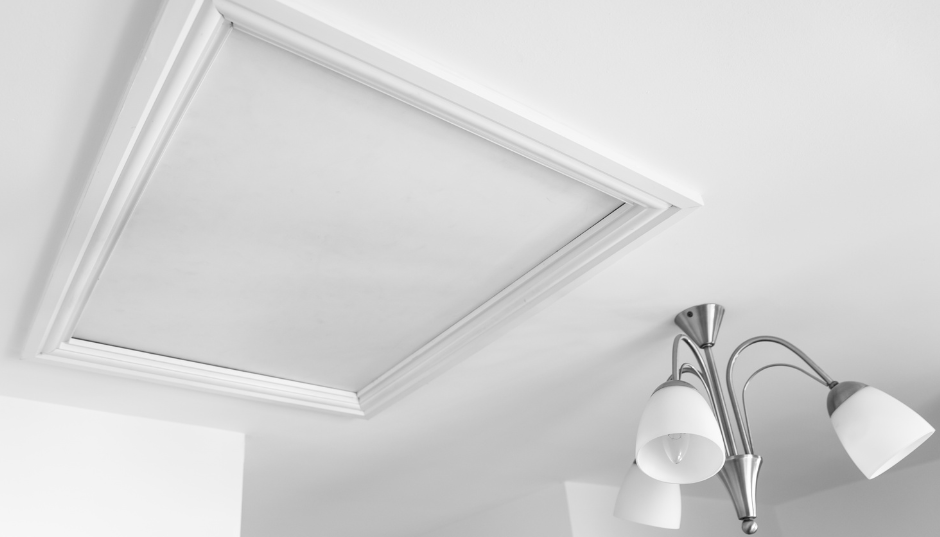
• Attic hatches lack proper insulation and air sealing
That last one is surprisingly common in older homes in Coeur d'Alene and Post Falls. Every shower, every bath, every humid load of dishes sends warm, moisture-heavy air directly into the attic space. Over a winter, that adds up to a significant amount of moisture being deposited right where you don't want it.
What Can Be Done About It
The good news is that attic condensation problems, once identified, are addressable. The fix usually involves a combination of:
• Air sealing at ceiling penetrations, attic hatches, and around plumbing and electrical points where warm air escapes
• Improving or restoring attic ventilation by clearing blocked soffit vents, adding ridge venting, or installing power ventilation in problem attics
• Rerouting exhaust fans so they vent outside through roof or gable vents rather than into the attic
• Adding or upgrading insulation with attention to vapor management, not just R-value
• In more severe cases, professional drying and mold remediation before any repairs are made
That last point matters. If condensation has been going on long enough that mold has started growing in the framing or decking, insulating over it won't solve the problem, it just traps it. The moisture and mold need to be addressed first, and then the preventive measures can be put in place.
If you've been dealing with dampness or moisture issues in other parts of your home, attic condensation may be part of a larger picture. Our post on why crawlspaces in North Idaho homes stay wet long after winter ends covers some of the same underlying dynamics, cold surfaces, poor airflow, and moisture that has nowhere to go.
And if you're wondering whether your home's water damage issues might be related to the freeze-thaw cycles we experience every winter, it's worth reading about how ice melt and deicing chemicals can accelerate moisture intrusion in North Idaho concrete. The same climate conditions that drive attic condensation also affect your driveways and foundation.
When to Call a Professional
If you suspect attic condensation has been going on for more than a season or two, or if you're seeing visible mold, soft decking, or significant staining, it's worth having a professional assess the situation before attempting repairs.
Restoration professionals can use moisture meters and thermal imaging to map out how far moisture has spread, including into areas you can't see from a standard attic inspection. That assessment matters because it determines whether you're dealing with a ventilation fix, a mold remediation situation, or a combination of both.
The IICRC (Institute of Inspection, Cleaning and Restoration Certification) sets the professional standards for moisture assessment and structural drying. Working with IICRC-certified technicians means the work is done to those standards, important both for the quality of the outcome and for any insurance documentation you might need.
Final Thoughts
Attic condensation doesn't make noise, doesn't flood your floor, and doesn't show up on your utility bill in an obvious way. It just quietly does its damage, season after season, until something gives. In North Idaho's cold winters, the conditions for this kind of hidden moisture problem are almost always present, the question is whether your attic is set up to handle it or not.
A little attention now can prevent the kind of costly mold and structural repairs that come from years of unchecked condensation. The homes we see with the worst attic moisture damage are almost never the result of one bad winter, they're the result of many winters where small problems were never caught.
If you haven't looked up into your attic recently, this winter might be a good time to ask yourself, do you actually know what's going on up there?